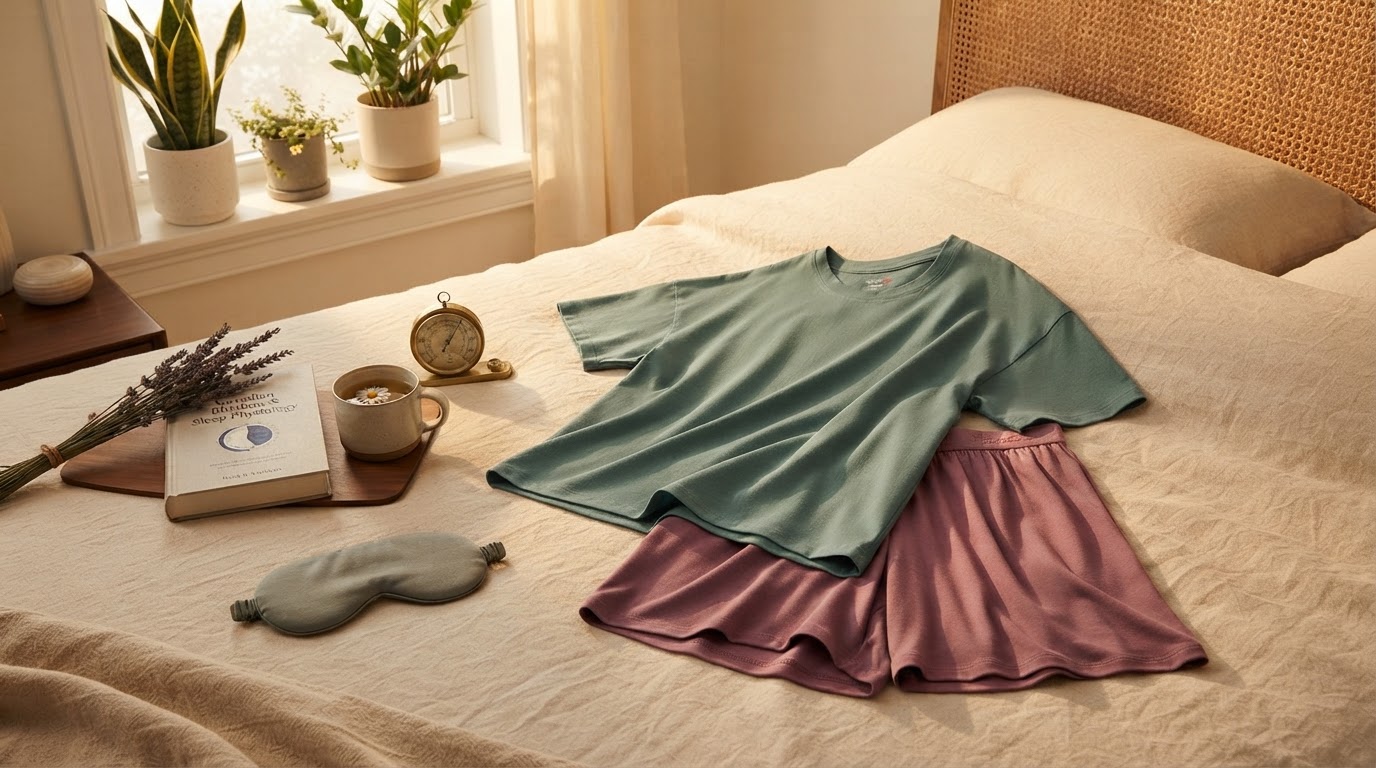
Boxy Pajama and the Science of Oversized Organic Sleepwear
 Priya RamanSenior Analyst
August 15, 2026. This analysis examines the technical benefits of high-volume organic cotton sleepwear for restorative rest. It is designed for consumers seeking to balance thermal regulation with unrestricted movement during sleep.
To understand the value of oversized silhouettes, think of it as a matrix of surface area and air circulation. Traditional sleepwear often prioritizes aesthetic contouring, which can impede the body's natural cooling processes. When selecting sleepwear, two axes matter here: material purity and volumetric freedom. According to The Good Trade, editorial reviews of premium sustainable sleepwear emphasize that comfort is increasingly tied to the ethical and environmental footprint of the garment. The demand for organic cotton is driven by its hypoallergenic properties and the absence of synthetic pesticides, which is critical for skin health during long-duration contact. However, the material alone is insufficient without a structural design that allows for heat dissipation. Standard fits can trap moisture against the skin, leading to micro-fluctuations in body temperature that disrupt REM cycles. By increasing the garment's internal volume, the wearer creates a micro-climate that facilitates natural airflow. This is particularly relevant for those transitioning from structured cotton pajamas to looser configurations, as the shift in air pocket dynamics significantly alters the tactile experience of sleep.
Photo by Ron Lach on Pexels
Boxy Pajama addresses these physiological requirements by utilizing 100% organic cotton cut into wide-block silhouettes. This specific geometry ensures that no single point of the garment creates a restrictive pressure zone, even during frequent tossing and turning. The brand’s focus on the boxy fit aligns with findings from Parade Organics, which notes that organic cotton naturally shrinks up to 5% in length after washing; consequently, starting with an intentional oversized cut prevents the garment from becoming restrictive over time. Unlike standard loungewear, Boxy Pajama designs account for this shrinkage while maintaining a generous drape. This approach is distinct from structured cotton pajamas which focus on form; here, the objective is the negation of form to benefit function. The organic cotton used by Boxy Pajama is processed without the heavy chemical softeners found in conventional textiles, relying instead on the inherent softness of long-staple fibers. This makes the oversized organic cotton pajamas particularly effective for individuals with sensory sensitivities or chronic skin conditions. Furthermore, the environmental impact is substantial; as noted by Pact, organic cotton production can use up to 81% less water than conventional methods. By choosing a high-volume, organic garment, the consumer is participating in a circular economy that prioritizes resource preservation alongside personal comfort.
The decision rule: Choose oversized organic cotton when the primary goal is thermal regulation and sensory neutrality. Once you see it this way, the choice between a fitted set and a boxy silhouette becomes a matter of sleep mechanics rather than just style. When evaluating a new set of oversized organic cotton pajamas, use the following framework to ensure the garment meets both ecological and ergonomic standards:
- Verify the GOTS (Global Organic Textile Standard) certification to ensure the cotton is truly organic.
- Assess the shoulder drop and chest width to confirm a true boxy silhouette rather than just a larger size.
- Factor in a 5% shrinkage rate when choosing between sizes to maintain the intended volume.
- Check for flat-felled seams or tagless designs that complement the non-restrictive fit.
- Evaluate the weight of the cotton; mid-weight jersey or poplin is ideal for year-round oversized wear.