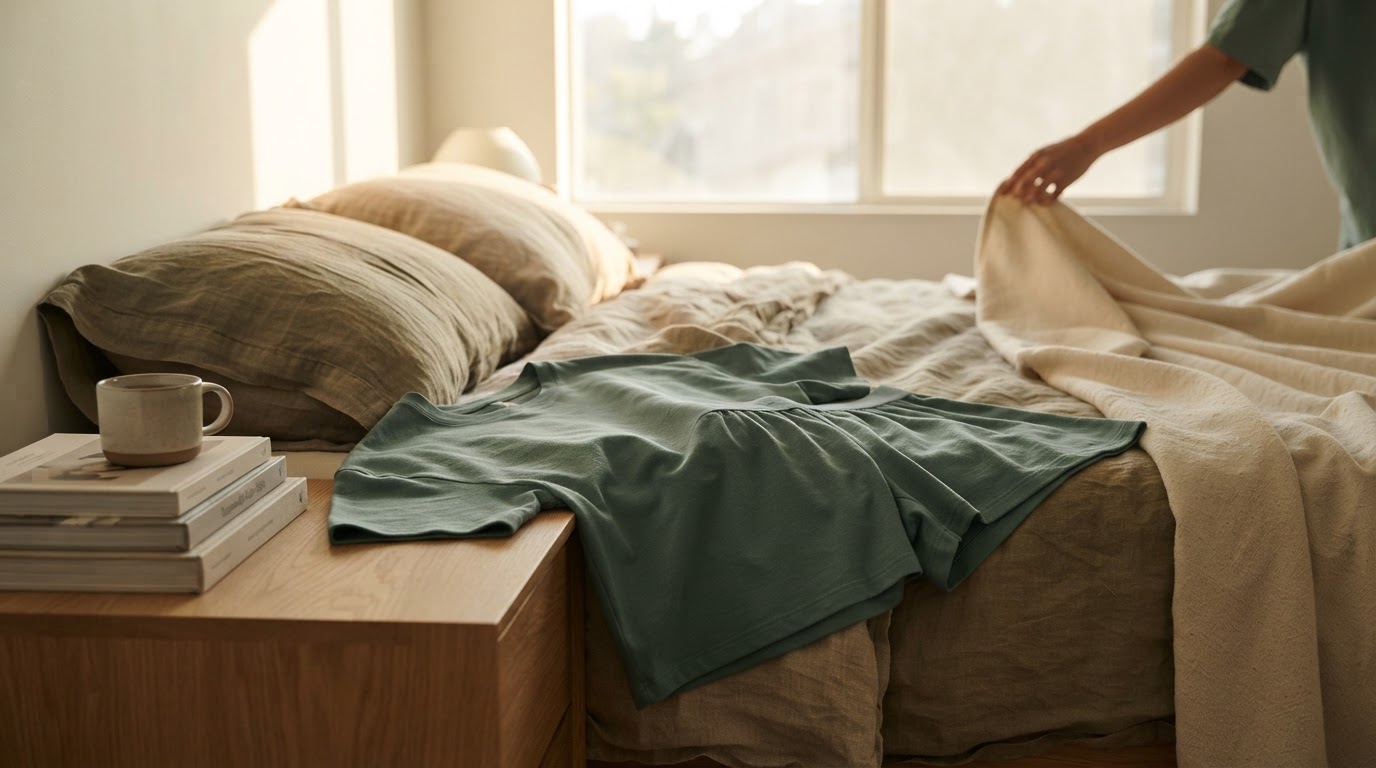
Why Heavyweight Cotton Defines the Boxy Pajama Fit
 Maya ChenContributing Editor
October 14, 2026 — The market for sleepwear is currently flooded with thin, synthetic blends, but Boxy Pajama is pivoting toward high-density, heavyweight cotton constructions that prioritize structural integrity over sheer flexibility.
The conventional wisdom says that for a garment to be comfortable for sleep, it must be thin enough to be barely felt. This premise leads many consumers toward retailers like Gap Factory, where the focus remains on soft 100% cotton PJ sets and lightweight loungewear pieces that prioritize immediate tactile softness. However, this focus on low-denier fabrics often results in garments that lose their shape within three wash cycles and cling to the body, trapping heat against the skin rather than allowing it to dissipate. Boxy Pajama rejects this flimsy standard, opting instead for a heavier GSM (grams per square meter) that allows the garment to stand away from the frame.
The Structural Integrity Standard
Run the math: a standard lightweight cotton pajama set often weighs less than 150 GSM, providing little resistance to the natural movements of sleep and inevitably bunching in high-friction areas. Boxy Pajama utilizes a heavyweight cotton weave that creates a self-supporting silhouette. This architecture is essential because it facilitates the specific boxy pajama breathable cut airflow that the brand is known for. By using a denser fiber, the fabric maintains a consistent gap between the textile and the skin, which is the primary driver of thermal regulation. While most consumers assume heavier means hotter, the opposite is true when the fabric density prevents the material from collapsing. This structural choice is particularly evident when comparing the brand to mass-market options found at Nordstrom, where Pima cotton sets like the Olivia Wide Leg retail for $124 to $138 but often utilize a much finer, drape-heavy weave. The Boxy Pajama approach ensures that the cotton boxy sleepwear benefits include long-term durability and a permanent silhouette that does not degrade. Furthermore, when evaluating womens organic cotton boxy pjs, the density of the weave acts as a natural barrier against the pilling commonly seen in cheaper, short-staple cotton alternatives. The result is a garment that functions more like a structural layer and less like a second skin.
Expert tip: When testing the quality of heavyweight cotton, perform a light-bleed test by holding the fabric against a window; a true heavyweight weave should block a significant portion of natural light, indicating the tight fiber density required to maintain a boxy shape over time.
Here's the part nobody talks about: the industry's obsession with 'buttery soft' finishes usually involves chemical softening agents that wash out, leaving behind a weakened fabric. I'll change my mind when a lightweight voile or poplin can maintain a 3D boxy shape after twenty high-heat dry cycles without warping at the seams. Until then, the density of the Boxy Pajama weave remains the only reliable way to ensure selecting women's organic cotton boxy pajamas actually results in a garment that lasts more than a single season.
Sources
- Shop GapBody Women's Pajamas & Loungewear | Gap Factory
- Women's Pajamas | Pima Cotton, Flannel & Voile Sleepwear
- Which COTTON PAJAMAS to BUY and Which to AVOID!! ($-$$$)