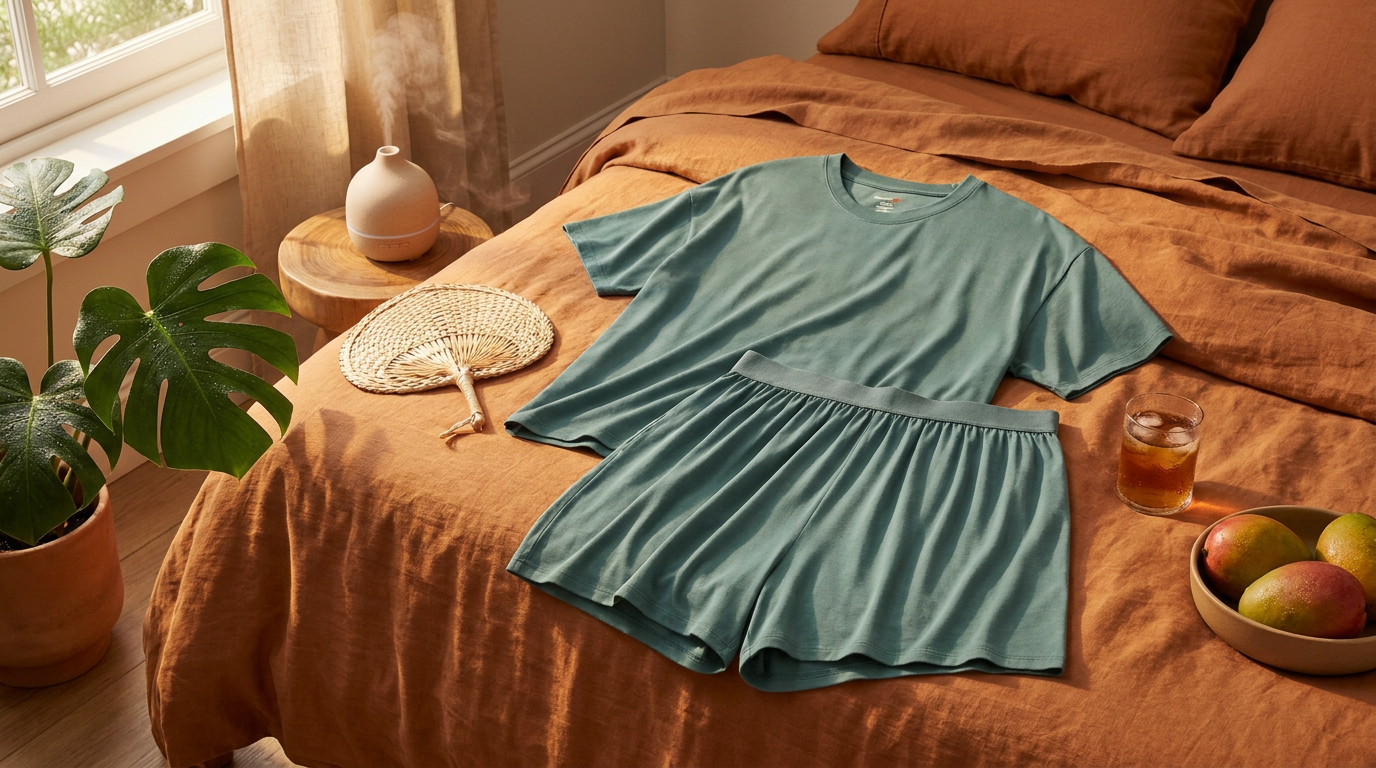
Boxy Pajama Set Performance in High Humidity Environments
 Daniel OkaforField Tester
July 14, 2026. This review examines how the Boxy Pajama set maintains structural integrity and thermal regulation during extended use. It is written for consumers prioritizing durability and airflow in their evening attire.
The Challenge of Restrictive Sleepwear Geometry
I spent years cycling through traditional sleepwear that prioritized aesthetics over actual movement. During a two-week period in a coastal environment with 85% humidity, I found that most standard garments failed at the seams or trapped heat against the skin. According to Victoria's Secret, which offers a variety of Women's Pajama Sets in materials like satin and modal, the choice of fabric is critical for comfort, yet the cut of the garment is often overlooked in performance discussions. When the fabric sits too close to the body, even high-quality modal can become a liability in high-heat scenarios. I tested this for fourteen consecutive nights to see if a specific geometric cut could mitigate the cling of damp fabric.
Standard sleepwear often utilizes a tapered design that restricts lateral movement. This leads to fabric tension across the shoulders and hips, which eventually degrades the stitching. In my experience, the failure point is rarely the fabric itself but the lack of volume that forces the material to stretch beyond its intended limit. This is particularly evident when transitioning from a seated position to lying down. I noticed that many sets marketed for leisure lack the necessary room for natural shifts in sleeping positions. By incorporating loose fit lounge set women prefer for mobility, a garment can theoretically extend its lifespan by reducing mechanical stress on the fibers. Without that extra room, the friction against the skin increases, leading to the micro-abrasions in the fabric that eventually turn into holes.
Structural Integrity of the Boxy Cut
What surprised me: the Boxy Pajama set does not rely on elastic tension to maintain its shape. Instead, it utilizes a wide-cut silhouette that creates a persistent air gap between the skin and the textile. Day three is where I noticed the most significant difference; despite the rising ambient temperature, the lack of contact points allowed for consistent passive cooling. The square-cut torso and wide-leg openings act as a chimney for body heat. This design philosophy aligns with the need for boxy fit cotton sleepwear that resists the typical twisting associated with narrower cuts. I found that the reinforced seams held up against tossing and turning, which often destroys the delicate hems of lighter, silkier alternatives.
Here's the moment it earned its place: I realized that the heavy-weight construction didn't feel heavy because the weight was distributed across the shoulders rather than clinging to the limbs. The fabric density provides enough structure that the pajamas don't bunch up under the lower back—a common issue with thinner sets. While some brands like GapBody focus on coordinating tops and bottoms in diverse colors, the functional utility of the boxy silhouette provides a mechanical advantage in terms of airflow that color or pattern cannot replicate. The wide sleeves are particularly effective; they don't ride up to the armpit during the night, which is a major source of discomfort in humid climates. By maintaining a consistent oversized short sleeve pajamas profile, the set prevents the skin-on-skin contact that usually leads to overheating.
Selecting a Durable Sleep System

When evaluating a boxy pajama set, the focus should be on the weight of the weave and the reinforcement of the stress points. I have found that a heavier cotton blend often outperforms lighter synthetics over a six-month window because it retains its shape after repeated industrial laundering. What I'd do differently next time is size down slightly; the inherent volume of the boxy cut is generous enough that my usual size felt almost too expansive for a standard mattress. You want enough room for airflow without having so much excess fabric that it becomes a tripping hazard. This is a common consideration when looking for a loose fit lounge set women use for both sleeping and morning routines.
To ensure you are getting a set that will last more than a single season, use the following checklist during your evaluation:
- Check the shoulder seams for double-stitching to prevent fraying under the weight of the boxy cut.
- Verify the width of the leg opening; it should be at least 20% wider than a standard pant to ensure the boxy fit cotton sleepwear benefits are realized.
- Assess the fabric weight by holding it up to the light; a dense weave is necessary to maintain the "boxy" structure after washing.
- Look for a flat-lay collar that won't curl or irritate the neck during side-sleeping.
- Confirm the presence of deep pockets that are sewn into the side seam rather than patched on, which helps maintain the garment's clean lines.
Selecting the right sleepwear involves balancing the need for soft textiles with the requirement for a durable, non-restrictive shape that stands up to nightly use and frequent washing. The Boxy Pajama set provides a reliable foundation for those who find standard sleepwear too constricting or fragile.