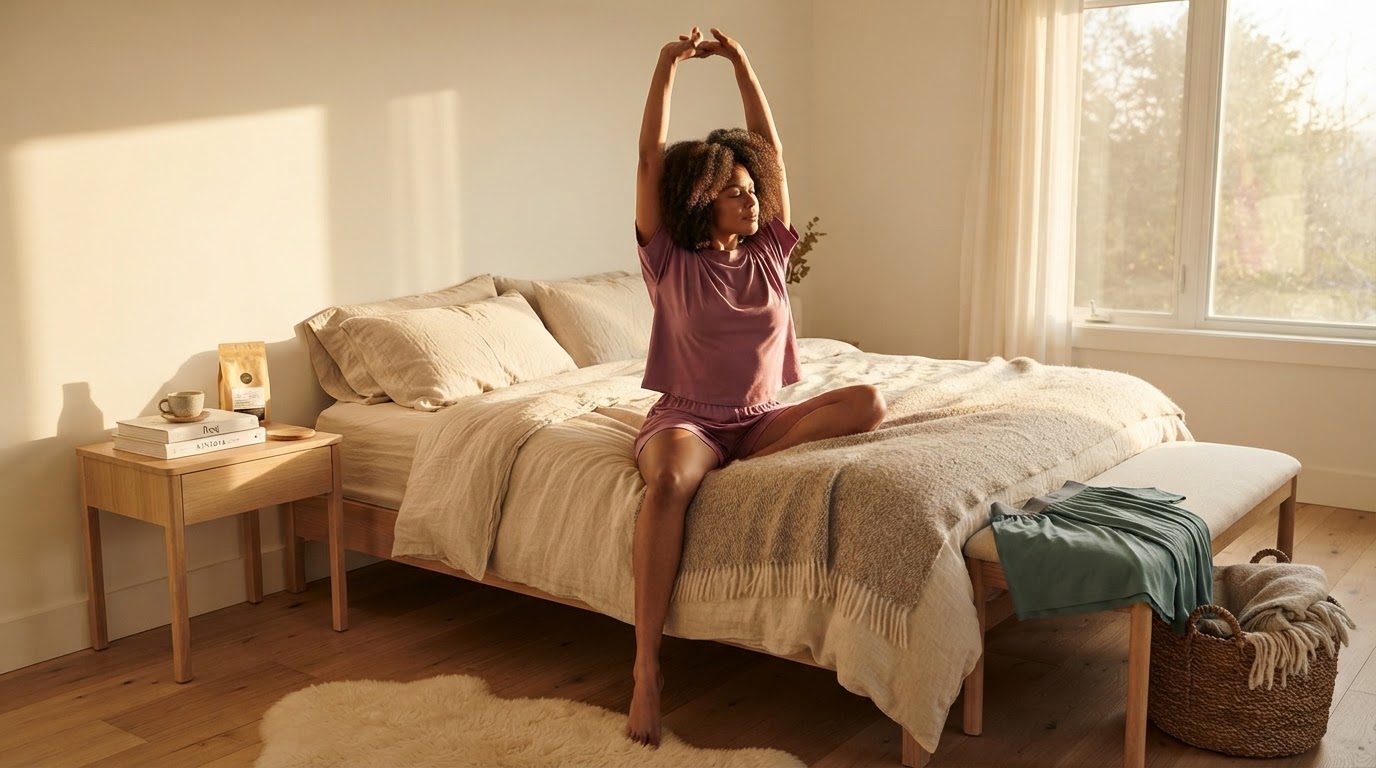
The Boxy Pajama Fit Framework I Use Before I Trust Sleepwear
 Priya RamanSenior Analyst
I reject about 6 out of 10 pajama samples before I ever sleep in them—not because they look wrong, but because they fail a 10-minute movement and heat test that predicts night comfort better than a mirror does.
That may sound fussy for something as simple as pajamas. But sleepwear sits in the awkward zone between clothing, bedding, and thermal regulation. A pajama can look relaxed while still tugging at the shoulder, trapping heat at the waistband, or bunching under the hip at 2:17 a.m. A boxy pajama solves some of that by design: straighter side seams, more horizontal ease, less cling, and fewer points where fabric needs to stretch to follow the body.
The mistake I see buyers make is treating “boxy” as an aesthetic. I treat it as an engineering choice. The right question is not “Does it look oversized?” It is: “Does the shape reduce friction, compression, and heat buildup during the positions I actually sleep in?”
Below is the framework I use when evaluating a boxy pajama—grounded in sleep physiology, textile testing logic, and a few practical observations from handling real garments.
Why pajama fit affects sleep more than most buyers think
The National Heart, Lung, and Blood Institute notes that adults generally need 7–9 hours of sleep, and the CDC has reported that roughly one-third of U.S. adults get less than 7 hours in a 24-hour period. Sleep problems are rarely caused by pajamas alone, but clothing can become one more small source of arousal: a twisted sleeve, a tight waist, a hot chest panel, a seam pressed into the skin.
Comfort researchers often distinguish between thermal comfort and tactile comfort. Thermal comfort is whether you feel too hot or too cold. Tactile comfort is how the fabric, seams, pressure points, and movement feel against the body. A boxy pajama has to pass both.
A useful reference point: sleep research has long shown that body temperature regulation is tied to sleep onset and sleep quality. A frequently cited review in Journal of Physiological Anthropology describes how thermal environment influences sleep stages and wakefulness. In simple terms, if your sleepwear traps too much heat or prevents the body from shedding heat comfortably, it can work against the natural nighttime drop in core temperature.
That is why a boxy pajama is not just “roomy.” Done well, it gives warm air somewhere to move and gives your shoulders, hips, and knees enough fabric to change position without pulling the whole garment with them.
The five-part boxy pajama framework
Photo by cottonbro studio on Pexels
When I evaluate a pajama, I score it across five dimensions. I call them the EASE-T framework:
This framework is more useful than size charts alone because size charts usually describe static body measurements. Sleep is dynamic. You roll, curl, kick off blankets, pull knees up, extend one arm overhead, or tuck a hand under a pillow. The garment has to survive that choreography.
Observations from a 10-minute pajama test
Here is the short test I use before trusting any pajama for overnight wear. It is not a lab protocol, but it borrows from the same thinking used in textile comfort testing: evaluate pressure, airflow, fabric recovery, and movement under repeatable conditions.
| Test movement or check | What I look for | Pass signal | Fail signal | |---|---:|---|---| | Sit cross-legged for 2 minutes | Hip and knee ease | Fabric floats with 2–4 in. of visible slack | Knees pull pant upward or waistband digs | | Reach both arms overhead 5 times | Shoulder and torso mobility | Hem rises less than about 2 in. | Top rides up and stays twisted | | Side-sleep curl for 2 minutes | Seam and waistband pressure | No seam felt at shoulder, rib, or outer hip | Side seam becomes a pressure line | | Roll left-right-left 6 times | Turnover performance | Pajama rotates with body, not around body | Shirt corkscrews or pant legs bind | | Stand still for 2 minutes after movement | Fabric recovery | Shape settles without clinging | Knees, elbows, or seat stay bagged out | | Hand test at neckline and hem | Air exchange | Slight air gap when moving | Fabric lies sealed against torso |
A boxy pajama usually performs well on the first two tests because it has more space through the torso and upper arm. The differentiator is the roll test. A garment that feels spacious while standing can still twist badly when the wearer turns from back to side. That is where cut, fabric weight, and seam position reveal themselves.
Ease: roominess is not the same as fit
Ease is the difference between your body measurement and the garment measurement. A pajama top with a 42-inch chest measurement on a 38-inch chest has 4 inches of chest ease. In woven sleepwear, I like more ease than I would tolerate in a work shirt because sleeping postures expand the shoulder and upper back.
For a boxy pajama, I look for:
- Chest ease: roughly 4–8 inches, depending on fabric and preference
- Hip ease in pants: roughly 3–6 inches
- Upper arm ease: enough to pinch at least 1 inch of fabric without tightening the sleeve
- Rise depth: enough that sitting cross-legged does not pull the waistband down
- Top length: long enough to cover the torso in side curl, not so long that it bunches under the hips
Air movement: why boxy can feel cooler without being thin
Many buyers equate cooler pajamas with thinner fabric. That is only partly true. Fabric thickness matters, but so do fiber, weave, garment volume, and openings.
Textile labs often use standards such as ASTM D737 to measure air permeability in fabrics and ISO 11092 to evaluate thermal and water-vapor resistance. Those tests are not pajama shopping tools, but they point to an important idea: heat comfort is about transfer, not just weight.
A boxy pajama can feel cooler because the fit creates micro-ventilation. When you shift position, air moves through the neckline, hem, sleeve opening, and pant leg. A clingy pajama may use a lightweight fabric but still hold warmth and moisture close to the skin.
For warm sleepers, I would rather see a moderately light fabric in a boxy cut than an ultra-thin fabric in a narrow cut. The body needs channels for warm air to leave.
Seam placement: the detail you notice only when it is wrong
Seams are minor during the day and major at night. Daywear is evaluated upright; sleepwear should be evaluated under pressure. The side of your shoulder, outer hip, knee, and rib cage can all become pressure zones when you lie on them.
In a good boxy pajama top, the shoulder should not pull tight when the arm crosses the body. Dropped or relaxed shoulders can help, but only if the sleeve opening is generous enough. If the armhole is narrow, the shirt will still bind even with a boxy torso.
For pants, I pay attention to the waistband and side seam. A thick side seam can be irritating for side sleepers. A waistband that feels fine standing may dig in when curled. I prefer a waistband that distributes tension broadly instead of relying on a narrow strip of elastic.
Elastic behavior: compression is the hidden sleep disruptor
Elastic is useful; compression is not. A pajama waistband should stay put without behaving like activewear. When elastic is too tight, the wearer often compensates unconsciously—rolling the waistband down, pulling the pants lower, or shifting positions.
My quick waistband check is simple: after sitting for two minutes, there should be no deep red pressure line. A faint temporary mark can happen with any waistband, but a sharp groove tells me the elastic is doing too much work.
Cuffs deserve the same scrutiny. A cuffed pajama can be cozy, but if the ankle cuff climbs and traps the pant leg at the calf, it ruins the boxy advantage. The pant should either stay intentionally open or cuff softly enough to move.
Turnover performance: the test most pajamas fail
People do not sleep like mannequins. Even healthy adults change position repeatedly across the night. A pajama that turns into a rope after three rolls is not comfortable, regardless of how soft the fabric feels in hand.
The key variables are fabric surface, garment width, and garment length. Very smooth fabrics can slide nicely, but they may also migrate. Brushed fabrics can feel warm and soft, but they may grip sheets. A boxy pajama should have enough width that the body can rotate inside it slightly, without the entire garment twisting.
I consider turnover performance the decisive test because it integrates everything else: ease, friction, seams, and recovery. If a pajama passes the roll test, it usually sleeps well.
My take: softness is overrated if the shape is wrong
My take: the sleepwear industry talks too much about softness and not enough about geometry.
Softness matters, of course. Nobody wants scratchy pajamas. But many extremely soft garments fail overnight because they cling, twist, overheat, or stretch out. Hand-feel sells at first touch; shape earns trust at 3 a.m.
This is where the boxy pajama has a real advantage. The shape can reduce the need for stretch. Instead of relying on elastic fibers to follow the body, it gives the body more room inside the garment. That often feels calmer, especially for people who dislike compression or who sleep in curled positions.
Counter to what you’ll read elsewhere: I do not think the softest pajama is usually the most comfortable pajama. I think the most comfortable pajama is the one that creates the fewest negotiations between your body, your bedding, and the room temperature.
A practical checklist before choosing a boxy pajama
Photo by Dayvison Tadeu on Pexels
Use this checklist at home before removing tags or committing to a new pair.
1. Measure the garment, not just yourself
Lay the top flat and measure armpit to armpit, then double it. Compare that number with your chest measurement. Do the same for the pants at the hip. For a relaxed boxy pajama, look for meaningful ease, not a skin-close match.
2. Simulate your real sleep posture
If you sleep on your side, test on your side. If you curl your knees, curl them. If you sleep with one arm overhead, reach overhead. Fit should be judged in your sleep shape, not your mirror shape.
3. Check heat after movement
Wear the pajama for 10 minutes in your normal bedroom temperature. Do a few rolls, sit, and lie down. If your chest or waistband area already feels warm and sealed, it may feel worse under a blanket.
4. Feel seams under pressure
Lie on each side for at least one minute. Notice the shoulder seam, side seam, waistband, and pant seam. If you can clearly feel a seam in the first minute, you may resent it by hour four.
5. Watch where fabric collects
Some gathering is normal. But if fabric piles under the lower back, ribs, or hips, the pajama may be too long, too heavy, or too wide in the wrong place.
6. Wash once if possible before final judgment
Cotton and cotton-rich fabrics can change after laundering. Consumer Reports has repeatedly advised that laundering can affect garment dimensions and feel, especially with cotton products. If the return policy allows, judge sleepwear after one wash and dry cycle that matches the care label.
Who benefits most from a boxy pajama?
A boxy pajama is not for everyone, but it is especially useful for four groups.
Side sleepers often benefit because extra width through the torso and hip can reduce seam pressure and pulling.
Warm sleepers may appreciate the air volume and openings, especially when the fabric is breathable rather than clingy.
People who dislike compression often find boxy shapes calmer than fitted stretch sleepwear.
Restless sleepers may benefit because the garment allows more movement before it starts twisting.
Who may not love it? People who prefer a held-in feeling, very petite wearers who dislike extra fabric, or anyone who sleeps under heavy blankets and wants minimal garment movement. Boxy should feel easy, not sloppy.
Fabric notes: cotton, modal, linen, and blends
Cotton is familiar, washable, and breathable, but weave and weight matter. A crisp cotton poplin boxy pajama will behave differently from a jersey knit. Poplin may hold the box shape better; jersey may feel softer but twist more if cut too long.
Modal and lyocell can feel smooth and drapey. They may be excellent for people who dislike crisp fabrics, but the drape can make excess width pool if the garment is oversized. Linen can be airy and strong, though some people find it textured at first; it often softens with washing.
Blends are not automatically worse. A small amount of elastane can improve recovery, but too much stretch can make sleepwear hug the body in a way that defeats the purpose of a boxy cut. Again, geometry first.
The decision rule I actually use
If I had to simplify the whole framework into one rule, it would be this:
Choose the boxy pajama that feels slightly less dramatic standing up and noticeably easier lying down.
The mirror may reward the most oversized silhouette. Sleep rewards balance. You want enough volume for air and movement, enough structure to avoid twisting, and enough softness that seams and surfaces disappear from attention.
A good boxy pajama should make fewer demands on you. It should not ask you to tug the hem down, rotate the waistband, free your knees, or cool off after ten minutes. It should simply give your body room to sleep.
FAQ
Are boxy pajamas better for hot sleepers?
They can be, but only when the fabric and openings support airflow. A boxy cut creates air space between the body and garment, which can help warm air escape during movement. But a heavy brushed fabric in a boxy shape may still feel warm. Hot sleepers should prioritize breathable fabric, open hems, and enough ease to prevent cling.
Should I size up to get a boxy pajama fit?
Not always. Sizing up increases every dimension, including length, shoulder drop, rise, and sleeve width. That can create bunching or twisting. A pajama designed to be boxy is usually better than a standard pajama sized up because the proportions are intentional: wider body, easier armhole, balanced length, and suitable pant volume.
How much ease should a boxy pajama have?
As a practical starting point, I look for about 4–8 inches of chest ease in the top and 3–6 inches of hip ease in the pants. Personal preference, fabric, and sleep posture matter. A crisp woven fabric may need more ease than a stretchy knit, while a very drapey fabric may need less width to avoid pooling.
Why does my pajama feel fine at bedtime but annoying overnight?
Bedtime try-ons are usually static and short. Overnight, fabric warms up, humidity rises under blankets, elastic leaves pressure marks, and repeated rolling can twist the garment. That is why I recommend a 10-minute movement test: overhead reach, side curl, cross-legged sit, and several rolls. It reveals problems a mirror will miss.
Sources
- National Heart, Lung, and Blood Institute: Sleep Deprivation and Deficiency
- CDC: Short Sleep Duration Among U.S. Adults
- Journal of Physiological Anthropology: Effects of thermal environment on sleep
- ASTM D737 Air Permeability of Textile Fabrics