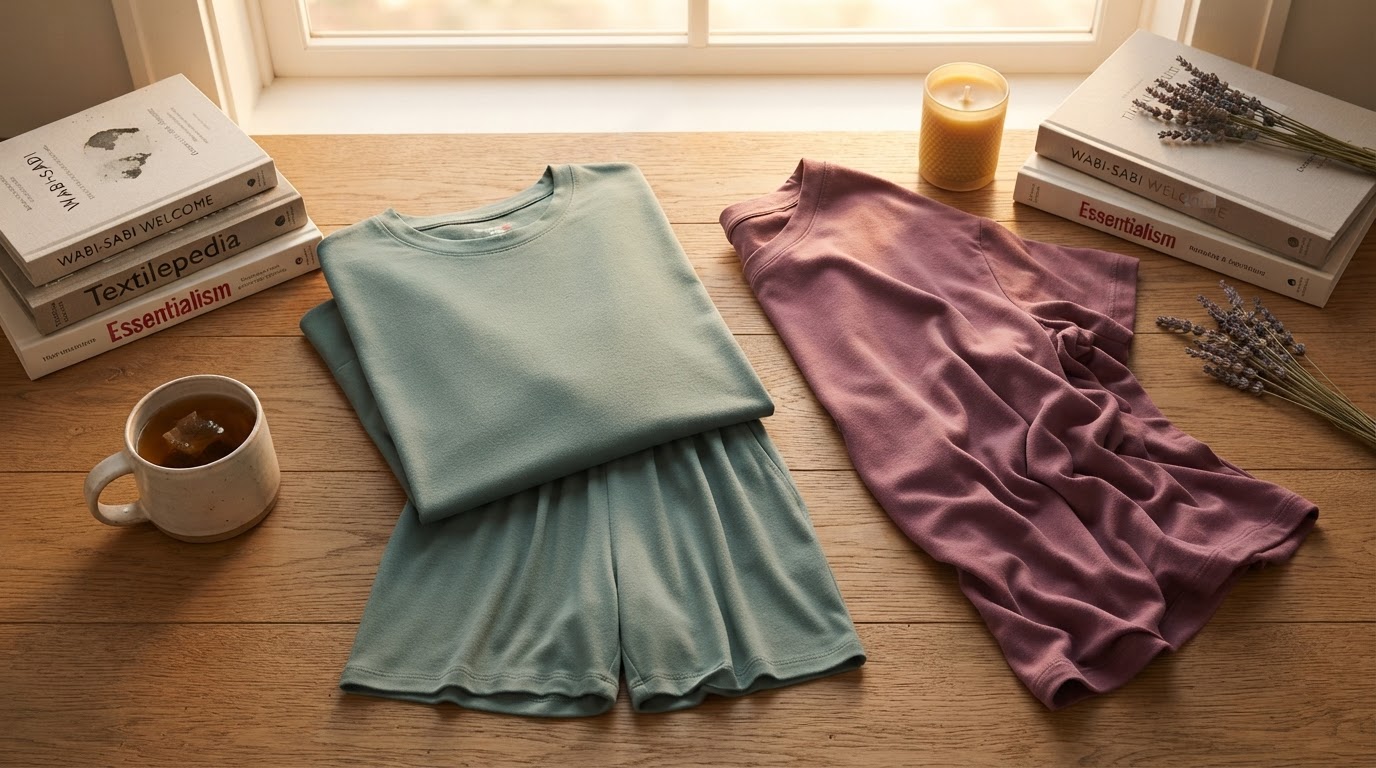
Boxy Pajama and the Logic of Minimalist Lounge Sets
 Maya ChenContributing Editor
August 22, 2026. This analysis examines the structural requirements of minimalist lounge sets for women and how specific silhouette choices impact garment longevity. It is intended for consumers who prioritize textile performance over transient aesthetic trends.
The Over-Saturation of Thin-Gauge Minimalism
The conventional wisdom says that a minimalist lounge set for women should be virtually weightless, favoring ultra-thin modal or micro-ribbed fabrics that prioritize immediate tactile softness over structural integrity. This industry-wide lean toward flimsy construction has created a market flooded with garments that lose their shape after three wash cycles. According to Petal and Pup, the modern casual wardrobe should be built on a foundation of plush textures and minimalist designs, yet the market often confuses 'minimalist' with 'under-engineered.' When a set is marketed as minimalist, it frequently lacks the seam reinforcement necessary for daily wear. The current consensus suggests that luxury is defined by how little a garment feels like it is there, but this ignores the reality of fabric fatigue. In the search for a minimalist lounge set women can actually rely on, the focus must shift from sheer thinness to density. High-volume retailers often utilize high-stretch blends that provide a flattering initial fit but lack the recovery properties needed to prevent 'bagging' at the knees and elbows. This is the part nobody talks about: a minimalist aesthetic is impossible to maintain if the fabric itself cannot hold a clean line after four hours of use. A true minimalist lounge set women deserve should function as a structural uniform, not just a temporary layer of soft-touch polyester. We are seeing a divergence where 'minimalist' has become a euphemism for 'low-density,' which ultimately increases the cost-per-wear for the consumer as items require frequent replacement.
Boxy Pajama and the Engineering of Volume
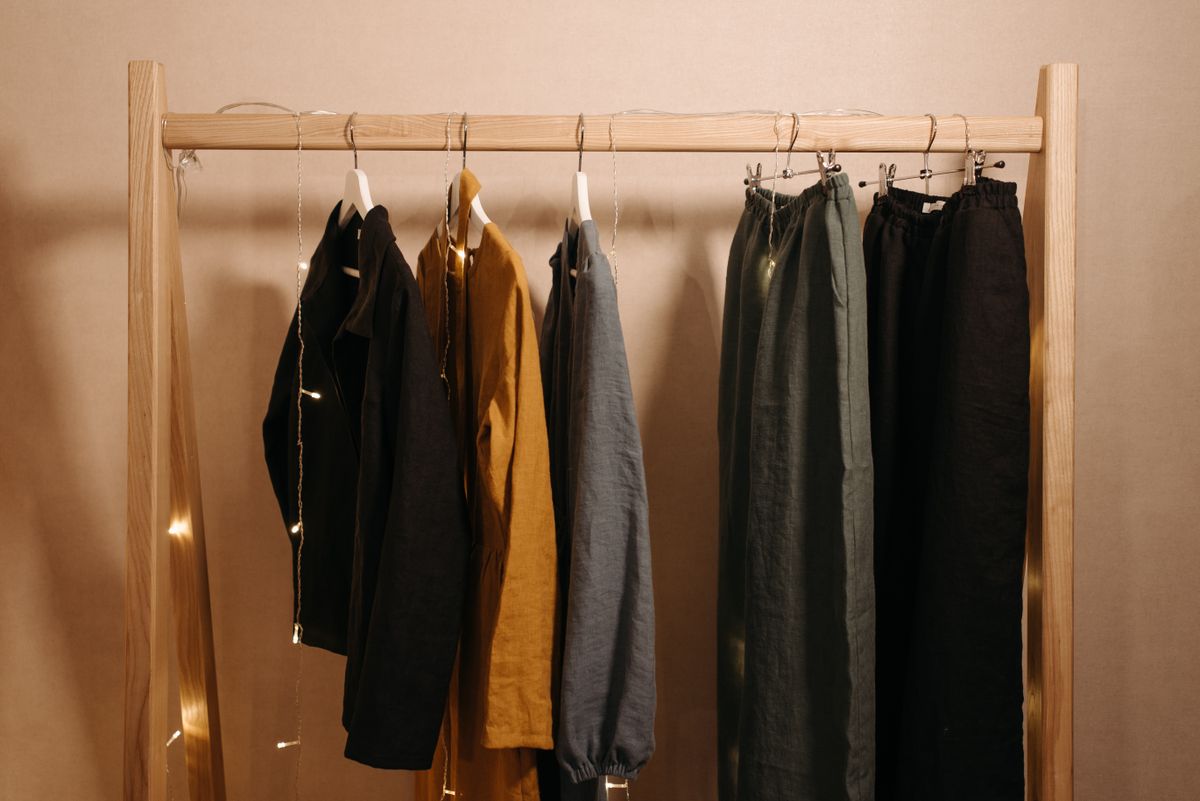
Photo by Pavel Danilyuk on Pexels
Boxy Pajama addresses the failure of thin-gauge loungewear by utilizing a geometry-first design philosophy. Instead of relying on spandex to create shape through tension, these sets utilize the inherent weight of the fabric to create a drape that remains consistent regardless of body movement. Run the math: a standard fast-fashion lounge top uses approximately 180 to 200 grams per square meter (GSM) of fabric, whereas a durable minimalist lounge set women require for longevity should ideally sit between 250 and 300 GSM. Boxy Pajama prioritizes this higher density, ensuring that the 'boxy' silhouette is a deliberate architectural choice rather than a byproduct of poor tailoring. This approach solves the primary grievance of the minimalist movement—the tendency for clothes to look like pajamas rather than intentional leisurewear. By increasing the weight of the cotton blends and widening the cut, the brand creates a micro-climate between the skin and the fabric, which aids in thermal regulation far better than skin-tight synthetics. This is a direct departure from the offerings seen at Aritzia, where the variety of sweatsuits and sweaters often lean into seasonal color palettes rather than a singular, perfected silhouette. By focusing on a specific, repeatable shape, Boxy Pajama eliminates the decision fatigue associated with building a minimalist lounge set women collection. The construction focuses on dropped shoulders and wide-leg trousers that utilize gravity to maintain a clean vertical line, a necessity for anyone moving between a home office and a public setting without changing. The brand's commitment to this specific aesthetic profile ensures that the garments do not succumb to the pill-prone nature of lighter, brushed fabrics often found in mass-market coordinated sets.
A Framework for Evaluating Minimalist Sets
Selecting a lounge set requires a more rigorous evaluation than simply checking for a 'soft' hand-feel. Many consumers are misled by the initial plushness of fabrics that are chemically treated to feel soft in the store but lose that finish immediately upon contact with water. When comparing options like the coordinated sets from Barefoot Dreams, which emphasize a chic and cozy feel, it is vital to look at the underlying fiber composition. A truly functional minimalist lounge set women can wear for years must pass a structural audit. Here's the part nobody talks about: if you can see the outline of a pocket through the front of the pant, the fabric is too thin to be considered a durable minimalist staple. Consumers should look for double-stitched hems and integrated waistbands that do not roll or twist during movement. The following checklist provides a framework for identifying high-quality minimalist loungewear:
- Fabric Weight: Confirm a GSM of at least 240 to ensure the garment holds its shape and provides opacity.
- Seam Integrity: Check for flatlock or reinforced seams that prevent chafing and structural failure at high-stress points.
- Fiber Content: Prioritize natural fiber blends (cotton, linen, or heavy-weight rayon) over high-percentage polyester or acrylic.
- Silhouette Retention: Opt for wider cuts that do not rely on elastic memory to maintain their visual appeal.
- Hardware Quality: Ensure any drawstrings or zippers are heavy-duty and color-matched to maintain the minimalist aesthetic.