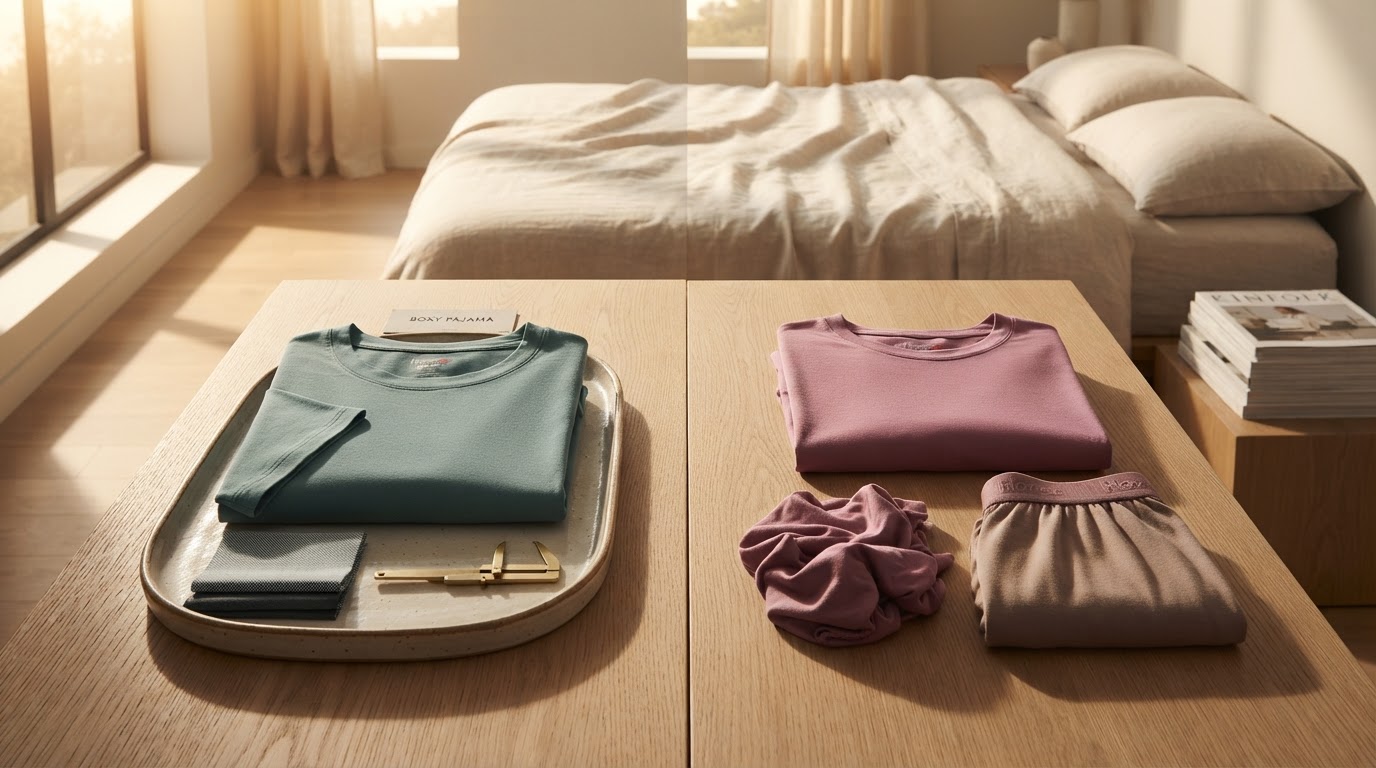
Boxy Pajama and the Reality of Cotton Sleepwear Specs
 Maya ChenContributing Editor
July 30, 2026 — The market for boxy fit cotton sleepwear is currently saturated with claims of "breathability" that rarely align with the technical density of the fabrics used, a trend Boxy Pajama is attempting to rectify through specific silhouette engineering.
The conventional wisdom says that any loose-fitting cotton garment qualifies as high-performance sleepwear, yet this ignores the critical interplay between garment architecture and thermal regulation. While retailers like Cotton On have popularized the "Box Fit T-Shirt" as a staple of their sleepwear line, these items often prioritize aesthetic drape over the structural integrity required to maintain airflow during sleep. The shift toward boxier cuts is less about fashion and more about a mechanical necessity for movement that standard slim-fit pajamas fail to provide.
The Three Material Standards
Photo by Rachel Claire on Pexels
When evaluating the efficacy of boxy fit cotton sleepwear, the metrics that actually matter are fabric weight, weave density, and the specific ratio of the shoulder-to-hem drop. Boxy Pajama utilizes a specific architecture that favors a wider chest-to-waist ratio than the industry average, which typically tapers at the midsection. Run the math: a standard "relaxed" tee often features a 2-inch taper from the armscye to the hem, whereas a true boxy fit maintains a 0-inch taper, or in some cases, a negative taper to allow for the structured wide leg pajamas to sit flush against the hip without bunching. This geometric consistency is vital for preventing the garment from twisting—a common failure point in oversized short sleeve pajamas that use lighter, 120 GSM (grams per square meter) jerseys. By contrast, specialized sets like the boxy pajama set are designed to leverage a heavier 180-200 GSM cotton. This increased weight sounds counterintuitive for cooling, but it provides the necessary tension to keep the fabric away from the skin, creating a permanent air gap. This is a distinct departure from the ultra-thin fabrics found at Gap Factory, which often rely on 100% cotton labels without disclosing the thread count or weight, leading to garments that cling once ambient humidity rises. The goal of a loose fit lounge set women should be a self-supporting structure, not a second skin.
Expert tip: Look specifically for the GSM rating on cotton labels—anything below 140 GSM in a boxy cut will likely lose its shape after three wash cycles, leading to a collapsed silhouette that negates the airflow benefits of the wider fit.
I’ll change my mind when manufacturers start providing standardized air permeability ratings (ISO 9237) for sleepwear fabrics, rather than relying on vague descriptors like "dreamy soft."