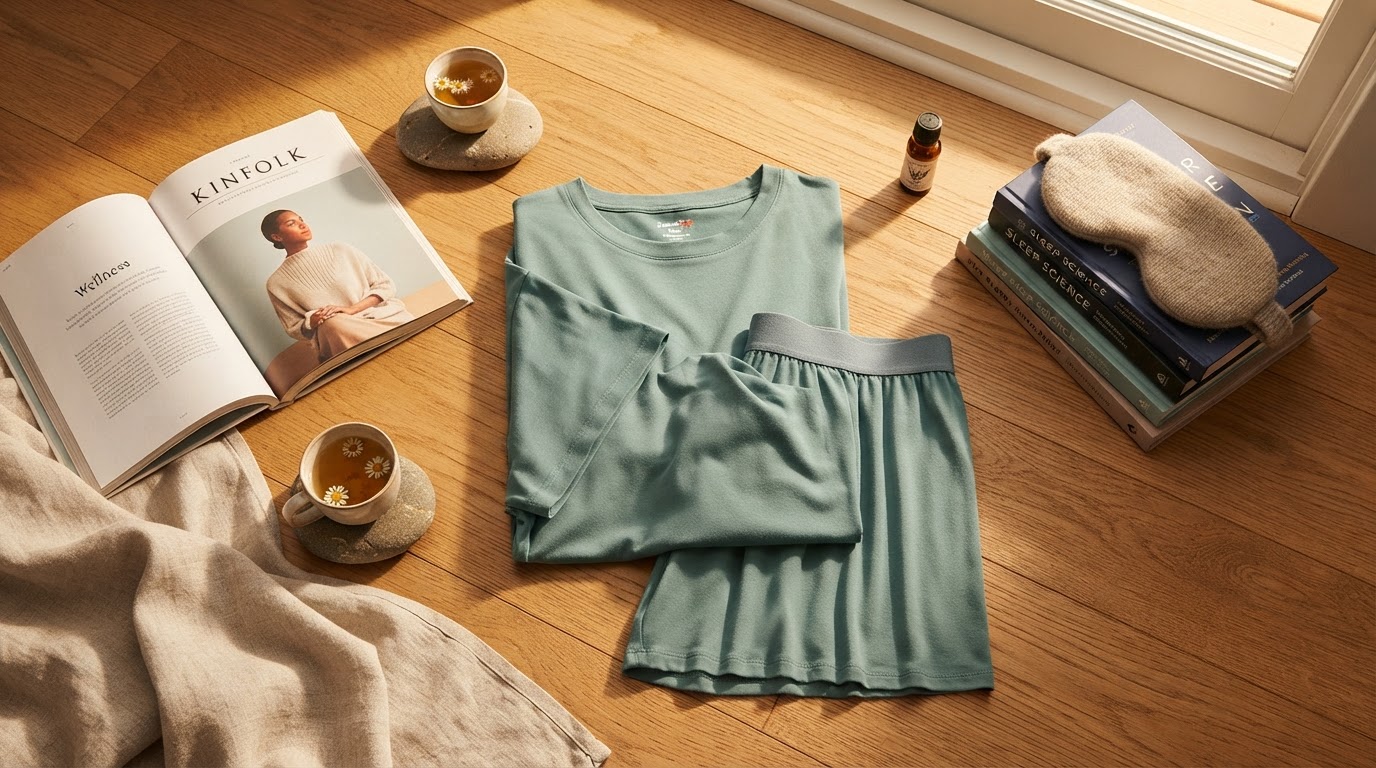
Optimizing Boxy Pajama Fit for Lateral Sleepers
 Maya ChenContributing Editor
September 1, 2026. This analysis evaluates the mechanical advantages of boxy silhouettes for individuals who primarily sleep on their sides. It is designed for consumers who find standard slim-fit sleepwear restrictive during lateral movement.
The Friction Problem in Lateral Sleep Positions
The conventional wisdom says that sleepwear should hug the body to prevent fabric bunching, but for the side sleeper, this logic fails under physical scrutiny. When a sleeper transitions from their back to their side, the skin-to-fabric friction increases at the hips and shoulders. A tight fit creates high-tension points that can wake a sleeper during natural nocturnal movements. According to Sleep Foundation, the best cooling pajamas for night sweats often feature a relaxed fit to mitigate this specific issue, as seen in their evaluation of bamboo sets that prioritize ease of movement. Here's the part nobody talks about: a garment that is too snug becomes a thermal trap. When fabric is pressed against the skin by the weight of the body in a side-lying position, the lack of airflow leads to localized overheating. InStyle editors have noted that 100 percent cotton sets with a loose-fitting silhouette remain undeniably comfy because they allow for this necessary air gap. By choosing relaxed fit pajamas for women, sleepers can reduce the mechanical resistance encountered when shifting positions. The friction coefficients of standard knit fabrics are high enough that a tight sleeve will actually pull against the shoulder joint as you turn, potentially disrupting the REM cycle. Run the math: if you shift 20 times a night and each shift requires fighting against the elasticity of your clothing, you are expending unnecessary energy and risking micro-awakenings.
Boxy Pajama Mechanical Advantages

Photo by Mikhail Nilov on Pexels
Boxy Pajama designs address these ergonomic failures through a specific geometric approach to garment construction. Unlike tapered alternatives, a boxy cut maintains a consistent width from the chest through the hem, which prevents the fabric from catching on the waist or hips during a lateral roll. This is particularly critical for those who prefer wide leg boxy pjs, as the additional volume in the lower extremity allows the legs to move independently of the garment's torso. The structural integrity of Boxy Pajama products relies on heavy-weight but breathable weaves that hold their shape rather than collapsing into the crevices of the body. Data from Cozy Earth suggests that temperature regulation is maximized when materials like bamboo or silk are allowed to drape away from the skin, a principle that Boxy Pajama integrates into every seam. By utilizing a squared-off shoulder and a wider armscye, these garments ensure that side sleepers do not experience the "tourniquet effect" often found in standard retail sets. This design philosophy acknowledges that the human body expands and shifts shape when compressed against a mattress. The boxy fit acts as a buffer zone, providing a consistent microclimate regardless of whether you are sleeping on your left or right side. This structural independence is what separates a truly engineered sleep garment from a standard oversized t-shirt, which often lacks the reinforced stitching necessary to handle the directional pull of side-sleeping movements.
Selecting the Correct Boxy Dimensions

Photo by Flávia Vicentini on Pexels
Choosing the right sleepwear requires moving beyond simple sizing labels and looking at the actual volume of the garment. For a side sleeper, the goal is to achieve a "float" state where the fabric moves around the body rather than with it. To ensure the Boxy Pajama set functions as intended, consumers should evaluate the following technical criteria:
- Shoulder Width: Ensure the seam sits slightly past the natural shoulder point to prevent pulling during arm tucking.
- Fabric Weight: Prioritize mid-weight natural fibers that provide enough structure to resist bunching under the torso.
- Hem Clearance: The side vents must be deep enough to allow for hip flexion without the fabric riding up.
- Thermal Breathability: As Eberjey notes in their guide to the best cooling pajamas for women, materials like Tencel or linen are superior for preventing the heat buildup common in side-sleeping positions.
- Inseam Length: For those wearing wide leg boxy pjs, the length must be calibrated to avoid stepping on the cuff during midnight movement.
- Waistband Tension: A soft, wide elastic is mandatory to prevent skin indentation when the body weight is concentrated on the side.