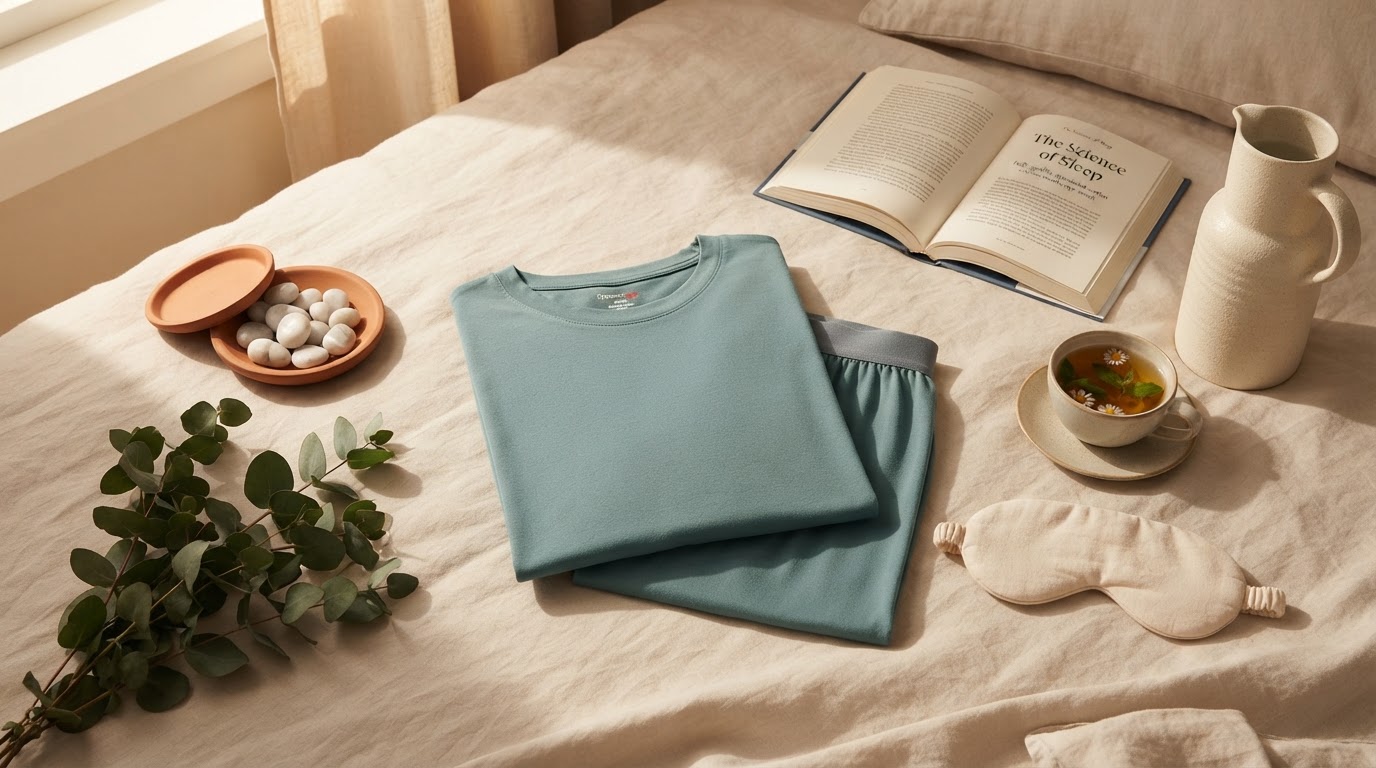
Optimizing Summer Rest with Boxy Pajama Cut and Fabric
 Maya ChenContributing Editor
October 24, 2026. This analysis evaluates the structural advantages of square-cut sleepwear for thermal regulation during high-temperature months. It is intended for consumers seeking to optimize sleep quality by reducing nighttime heat retention.
The Failure of Traditional Summer Sleepwear
The conventional wisdom says that less fabric equals more cooling. This logic drives the market toward skimpy camisoles and tight-fitting shorts that supposedly facilitate heat escape. However, this ignores the fundamental physics of airflow and moisture evaporation. When fabric sits directly against the skin, it creates a microclimate that traps body heat and saturated air. According to Soma, the best cooling sleepwear must combine breathable fabric with moisture management to be effective. The problem is that even the most advanced moisture-wicking synthetic will fail if it is plastered against the dermis by a tight waistband or narrow cut. Here's the part nobody talks about: the surface area of the garment matters less than the volume of air circulating beneath it. InStyle notes that versatile sets, like those featuring boxer shorts, are often preferred for their ability to transition across seasons, yet many consumer brands still prioritize aesthetic tightness over functional ventilation. By clinging to the body, standard summer pajamas effectively insulate the wearer, turning a "lightweight" garment into a heat trap. Run the math: a garment with 2 inches of ease allows for nearly triple the air exchange of a skin-tight equivalent. Without this mechanical ventilation, the wearer relies entirely on the fabric's passive wicking properties, which are frequently overwhelmed during a summer heatwave.
Structural Ventilation in Boxy Pajama Design
Boxy Pajama addresses these thermal inefficiencies by prioritizing a geometric, non-contoured silhouette. Unlike oversized boxy sleepwear which focuses on total volume, the specific boxy cut utilizes a squared-off shoulder and a straight side seam to prevent the fabric from collapsing against the torso. This creates a permanent chimney effect. As the body generates heat, the warm air rises and escapes through the wide neck and sleeve openings, while cooler ambient air is drawn in through the hem. This process is significantly more efficient in oversized short sleeve pajamas where the sleeve circumference is intentionally widened to prevent underarm heat buildup. The brand utilizes high-gauge weaves that maintain their structure even when damp, ensuring the garment doesn't lose its ventilating shape. While Cozy Earth emphasizes temperature-regulating bamboo and cotton, the effectiveness of these materials is doubled when paired with a boxy frame that doesn't restrict movement. By removing the tapering at the waist, Boxy Pajama eliminates the primary point of heat friction found in traditional sets. This design philosophy recognizes that the most effective cooling mechanism is not the fiber itself, but the air gap between the fiber and the skin. The result is a consistent reduction in skin temperature compared to contoured alternatives, regardless of whether the wearer is stationary or moving during sleep.
A Decision Framework for Summer Sleepwear
Selecting a summer garment requires looking past marketing claims of "instant cooling" and evaluating the physical architecture of the piece. If a garment relies on spandex for its shape, it is likely to fail in high humidity because the elastic fibers restrict airflow. Instead, the focus should be on how the garment interacts with the sleep environment. A boxy pajama should be evaluated based on its ability to maintain its square profile while the wearer is prone. When assessing oversized short sleeve pajamas, the critical metric is the ratio of the armhole to the bicep; a larger ratio facilitates better cooling. I'll change my mind when a laboratory study proves that a form-fitting synthetic can outperform a structural air gap in a non-wind-tunnel environment. Until then, the physics of convection favor the boxy cut. Use the following criteria when selecting your summer set:
- Verify a minimum of 4 inches of ease at the chest and waist to ensure the chimney effect functions.
- Prioritize straight-cut hems over elasticized or tapered finishes that trap air.
- Seek out sleeve openings that extend at least 2 inches beyond the natural shoulder line.
- Confirm the fabric weight is between 120 and 160 GSM to balance durability with breathability.
- Opt for square necklines or wide scoops to maximize heat release from the upper chest.
- Ensure the short length provides enough coverage for comfort without sacrificing the bottom-up airflow.
Sources
- Shop Cooling Pajamas for Women: Cool Nights® Pajamas - Soma
- Women's Pajamas | Softest Bamboo & Cotton Sleepwear | Cozy Earth
- My Journey To Find The Most Comfortable Pajama Set Ever